
Most UK tilers charge around £50 per m² for labour, a day rate of £200–£350 (about £300 is typical) or around £40 an hour. Expect more in London, for small rooms with a lot of cutting, and for porcelain, natural stone, mosaic or large-format tiles.
Adhesive and grout add about £10 per m², and the tiles are extra.
There's no fixed rate for tiling labour in the UK. What a tiler charges depends on where they work, the tile, the surface and how much prep the job needs. The published price guides agree on the general level, though. If you're a tiler, it shows where your own rate sits. If you're having a room tiled, it shows what a fair quote looks like.
How much does a tiler charge per m², per day and per hour?
| How it's charged | Typical UK rate | Notes |
|---|---|---|
| Labour per m² | around £50 | The most common way to price a job. Checkatrade and MyBuilder both put the average at about £50/m². |
| Day rate | £200–£350 | About £300 is typical. Used for awkward or uncertain jobs. |
| Hourly | around £40 | Mostly for small repairs and call-outs. Checkatrade's table also lists £50 an hour for wall tiling. |
| Adhesive and grout | about £10 per m² | On top of labour. The tiles themselves are extra. |
What typical tiling jobs cost
MyBuilder gives these averages for whole jobs, including labour, adhesive and grout. The cost of the tiles varies too much to include, so check whether a quote includes them.
| Job | Typical cost | Time on site |
|---|---|---|
| Tiling a floor | £400–£1,000 | 1–2 days for a small room, 2–3 for a large one |
| Tiling a bathroom, floor and walls | £500–£1,200 | 3–4 days |
| Tiling kitchen walls | from £100–£200 |
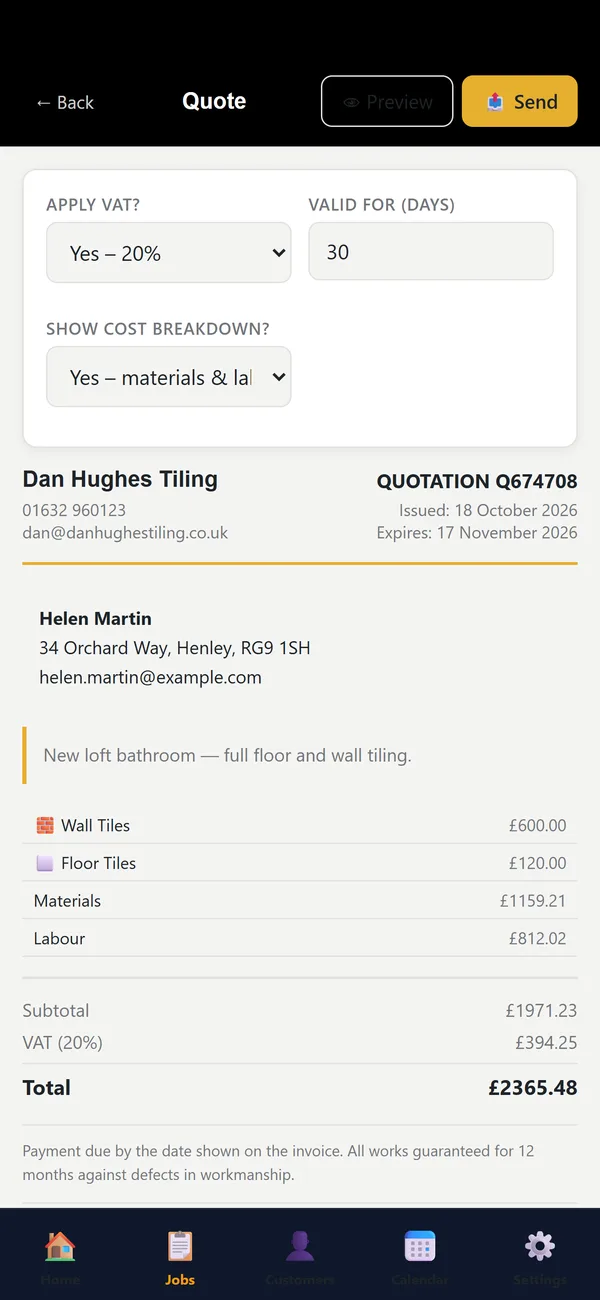
Bathrooms often cost more than the per m² rate suggests. They need prep, tanking around the shower and a lot of cutting around fittings. See how to quote a bathroom tiling job for a full worked example, and how much to charge to tile a shower.
What makes a tiler charge more
- Where you are. Tilers in London charge more than those in the North and much of the rest of the UK (MyBuilder).
- The tile. Ceramic is the cheapest to fit. Porcelain, mosaic, natural stone and glass cost more (MyBuilder).
- Large-format tiles. They're slower to lay than normal tiles (Checkatrade) and need a flatter surface, more adhesive and often two people to handle.
- Small or fiddly areas. Below about 10 m², the price per m² often goes up or there's a small surcharge (Checkatrade).
- Prep. Removing old tiles, levelling, boarding and tanking are usually priced separately from laying.
How much a tiler can lay in a day
Checkatrade's guide gives typical output of 10–15 m² a day on walls and 8–12 m² a day on floors. Use this to check that a per m² rate and a day rate agree with each other:
- 12 m² a day at £25/m² is £300 a day.
- 10 m² a day at £35/m² is £350 a day.
If a per m² rate works out well below the day rate on small or fiddly jobs, those jobs need a minimum charge or a day rate instead.
Day rate or price per m²: which should you use?
| Price per m² | Day rate | |
|---|---|---|
| Best for | Clear, measurable areas: floors, full walls, repeat work | Unknowns: old buildings, heavy prep, repairs, patterns you haven't laid before |
| Customer sees | A fixed price they can compare | An estimate that depends on how long it takes |
| Risk sits with | You, if the job takes longer | The customer, if the job takes longer |
| Watch out for | Small rooms with lots of cuts: set a minimum charge | Customers comparing against fixed quotes |
Many tilers quote per m² for the main areas and use a day rate, or a fixed sum, for prep and anything uncertain. Whichever you use, check one against the other. The tiling labour calculator for tilers shows what a per m² price earns per day.
What's included in a labour rate
A quote should say clearly what the rate covers. Customers compare quotes line by line, and a lower price that leaves out prep isn't really cheaper. Things that are often priced separately:
- removing old tiles and making good the wall or floor;
- levelling compound or screed on uneven floors;
- tanking in showers and wet rooms;
- backer board or plasterboard;
- trims, silicone sealing and boxing in pipes;
- waste removal.
Setting your own rate
Published averages are a starting point. Work your rate out from what you need to earn and how much you lay. The guide to working out a self-employed tiler's day rate takes you through it step by step, with a free day rate calculator for the sums.
To price a particular job from your own rates, including tanking, levelling and a minimum charge, use the free tiling labour calculator.
Common questions
How much does a tiler charge per hour?
Around £40 an hour (Checkatrade, MyBuilder), though Checkatrade's table also lists £50 an hour for wall tiling. Most tilers only charge by the hour for small repairs; bigger jobs are priced per m² or by the day.
How much does a tiler charge per day?
Usually £200–£350, with about £300 typical (Checkatrade). Tilers in London usually charge more (MyBuilder).
How much does a tiler charge per m²?
Around £50 per m² for labour on average (Checkatrade, MyBuilder). Adhesive and grout add about £10 per m², and the tiles are extra.
How much does it cost to tile a bathroom?
MyBuilder's average for the floor and walls is £500–£1,200, over three to four days, but its prices are for 2024 and bathrooms with tanking and a lot of cutting cost more. A tiler should break the quote down into labour, prep, tanking and materials.
Do tilers charge a minimum?
Often, yes. On areas under about 10 m², expect a higher rate per m² or a small surcharge (Checkatrade), because setting up and cutting take as long on a small job as on a big one.
Sources
- Checkatrade: How much does tiling cost in 2026? · updated June 2026; average labour per m², day and hourly rates, output per day, small areas
- MyBuilder: How much does tiling cost? · average labour per m², hourly and day rates, adhesive and grout, typical job costs and durations; prices stated for 2024
- Checkatrade: Large format tile installation cost · large-format day rate and speed; cost table updated May 2024
Prices change. Figures were checked on 5 November 2026; always check current costs and your own figures before quoting.